Extension · Chrome and Edge/0.1
SecureAI Extension
It would detect source code, internal documents and the terms the company marks as confidential before they reach an unapproved AI, and redirect to the approved space.


Its engineers pasted source code into ChatGPT, it banned generative AI, and three years later it opened it to everyone. How SecureAI would apply.
Samsung is not a Hiper AI customer. This case study uses public information only.
The operation
BanningBanningAIAItooktookaamemo.memo.OpeningOpeningititagainagainwithwithcontrolscontrolstooktookthreethreeyears.years.
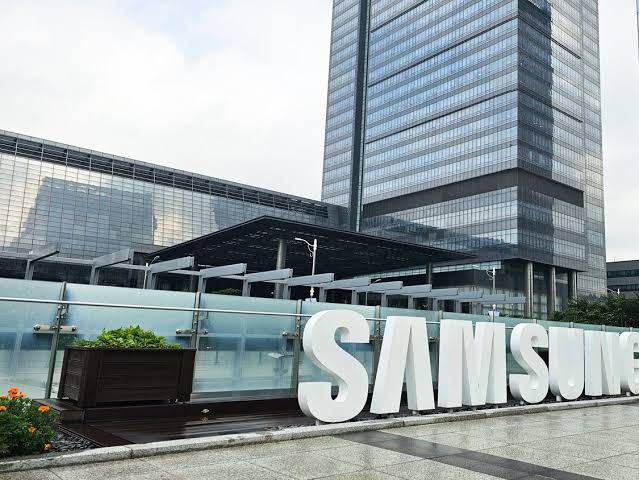
Samsung Electronics designs chips, phones and appliances, and its edge depends on what it does not publish: its teams’ code, its fabs’ data and what gets said in its meetings.
In three years it walked the path every company walks today: opening up consumer AI, shutting it after a leak, and opening it again with controls.

Three public decisions, 2023 to 2026
In March 2023 the semiconductor division let its engineers use ChatGPT. Within about three weeks there were three leaks: one engineer pasted source code to get errors fixed and another turned notes from an internal meeting into a presentation, according to The Economist Korea. On May 2, 2023 an internal memo banned generative AI on company devices and the internal network, according to Bloomberg. In 2025 Samsung allowed ChatGPT again under new security rules, except for teams working on sensitive products. In June 2026 OpenAI announced ChatGPT Enterprise and Codex for every Samsung Electronics employee in Korea and the whole DX division worldwide.



Step by step
What happens
The semiconductor division lets its engineers use ChatGPT.
 SecureAIWhat SecureAI would do
Workspace provides the models the company chooses, and the Extension applies DLP to code and internal documents from day one.
Where AI lives
Today: every door on its own, with no common control.
With SecureAI, all four fall under the same policy.
SecureAIWhere the risk comes in
An engineer who wants a bug fixed pastes the whole file. Once it is sent, the company cannot ask for it back.
A ban stops AI on the company network, not on the phone, and the company loses sight of usage.
With Codex and other agents, AI no longer receives only what the employee pastes: it reads files and runs commands on their machine.
From banning to governing, with SecureAI
The company blocks ChatGPT on its network. The engineer keeps using it from their phone, and the company loses sight of it.
Workspace provides the models the company chooses. Internal project and system names travel tokenized: the model never sees the real value.
With Codex and other agents, AI reads the repository and runs commands. SecureAI inventories each agent, assigns an owner and cuts what nobody approved.
Every decision leaves a signed receipt, verifiable without entering the console.
Illustrative simulation with fictitious data
How SecureAI would apply
It would detect source code, internal documents and the terms the company marks as confidential before they reach an unapproved AI, and redirect to the approved space.
It would give engineering the models the company chooses, with sensitive data tokenized before it reaches the model.
On engineering PCs, it would see which coding agents run and which files they request, and apply the same policy.
Every decision would leave a verifiable receipt, to show what data reached each model.
How it would roll out
From allowing ChatGPT and suffering three leaks (Mar. 2023) to deploying ChatGPT Enterprise in the DX division (Jun. 2026), with a ban in between.
Approved AI, DLP on code, policies for coding agents and signed receipts, rollout included.
Dedicated instance, sign-in with the company’s identity provider, and the Extension and the SecureAI Agent installed through device management.
What the CISO measures Devices with the Extension or the Agent installed, out of the total.
The Extension and the SecureAI Agent to see which AI and which coding agents each area uses.
What the CISO measures AI use outside the approved space, by area.
Workspace for engineering and DLP on source code and internal documents.
What the CISO measures Code and internal documents stopped before they leave.
Policies for coding agents and signed receipts for every decision.
What the CISO measures Coding agents with a policy, out of the total.
More case studies